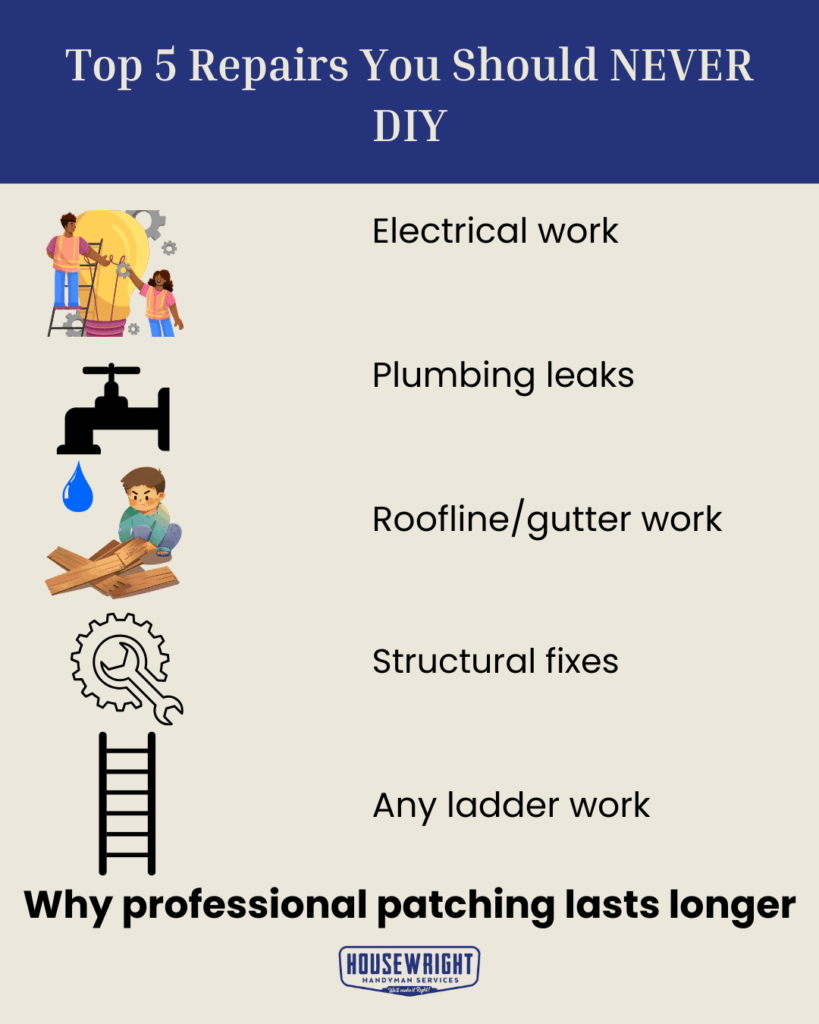
Short Answer:You should avoid DIYing electrical work, plumbing repairs, structural fixes, and any job that requires ladders, cutting, or specialized tools — especially in older Baltimore rowhouses with aging wiring, outdated plumbing, and moisture-prone basements. These tasks carry safety risks, can cause expensive damage, or violate local codes. A trained Baltimore handyman can do them safely, quickly, and correctly. Jobs a Baltimore Handyman Can Do That You Should Not DIYBelow is the quick, practical list homeowners like you should take note of — the real no-DIY jobs. 1. Electrical Work (High Risk in Older Baltimore Homes)Most Baltimore homes — especially in neighborhoods like Canton, Hampden, Parkville, or Bel Air — were built decades ago. Do NOT DIY:
One wrong wire can cause sparks, outages, or even house fires. 2. Plumbing Repairs (Leaks, Pipes, Valves, Drain Issues)Baltimore homes often have:
These make DIY plumbing risky. Do NOT DIY:
A small mistake can lead to flooding or mold — expensive outcomes in Baltimore’s moisture-heavy climate. 3. Structural & Interior Repairs (Especially in Rowhouses)Old rowhouses shift over time. Walls crack. Doors fall out of alignment. Do NOT DIY:
Behind every “simple drywall crack” may be humidity issues, foundation settling, or old framing quirks. A handyman knows how to diagnose the real issue — not just patch the symptom. 4. Exterior Work: Ladders, Heights & RooflinesBaltimore winters, storms, and humid summers cause:
Do NOT DIY:
Ladder falls are among the top homeowner injuries — and most people have the wrong ladders or no stabilizers.
Baltimore-Specific Risks That Make DIY Even RiskierBaltimore is not like other cities — its housing stock brings unique repair challenges: • Old WiringMany homes predate modern electrical safety standards. • Outdated PlumbingBaltimore County, Harford County, and some City neighborhoods still have decades-old supply lines. • Moisture & Basement LeaksThe city’s humidity + old foundations = hidden mold potential. • Rowhouse Shared WallsA DIY mistake can affect your neighbor’s wall, plumbing, or wiring. • Local PermitsCertain repairs (electric, exterior structural) require permits when done improperly. A professional handyman understands these nuances — homeowners usually don’t. Quick Rule-of-Thumb Checklist: DIY or Handyman?DIY is OK if:
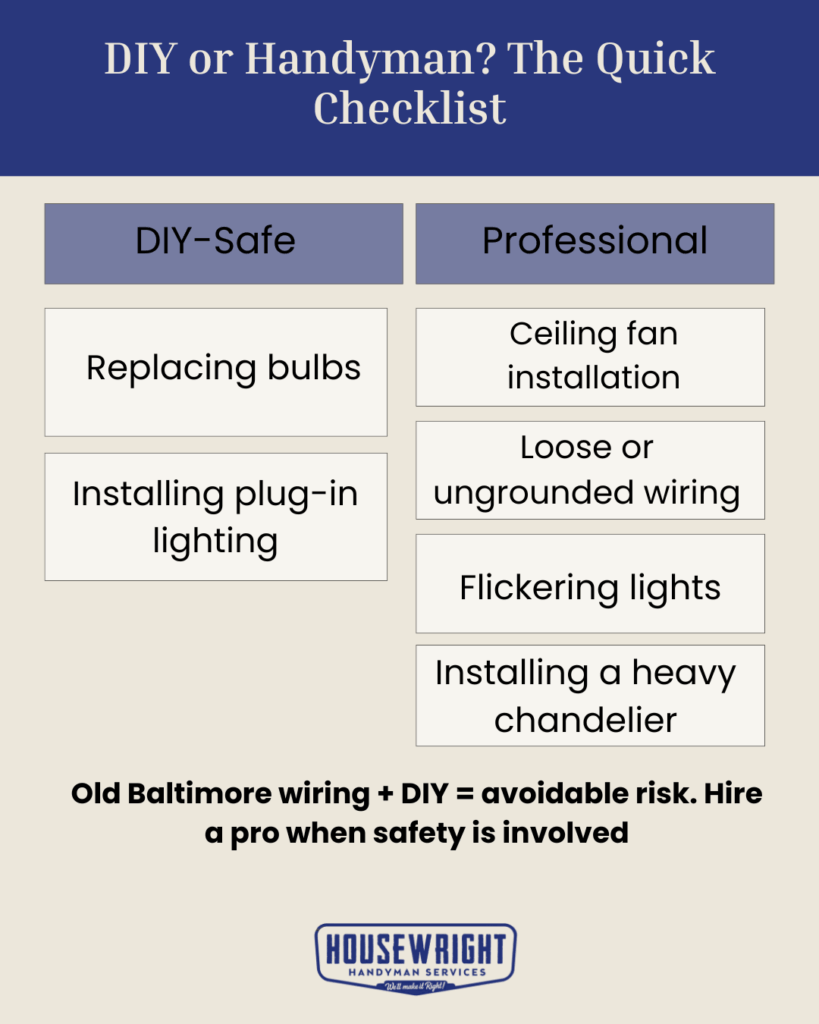
Call a Handyman if:
Get Safe, Professional HelpIf you’re in Baltimore, Towson, Bel Air, or Columbia, and don’t want to risk injury or costly damage, a skilled handyman can complete repairs safely and correctly the first time. 👉 Get reliable, professional handyman help.
|