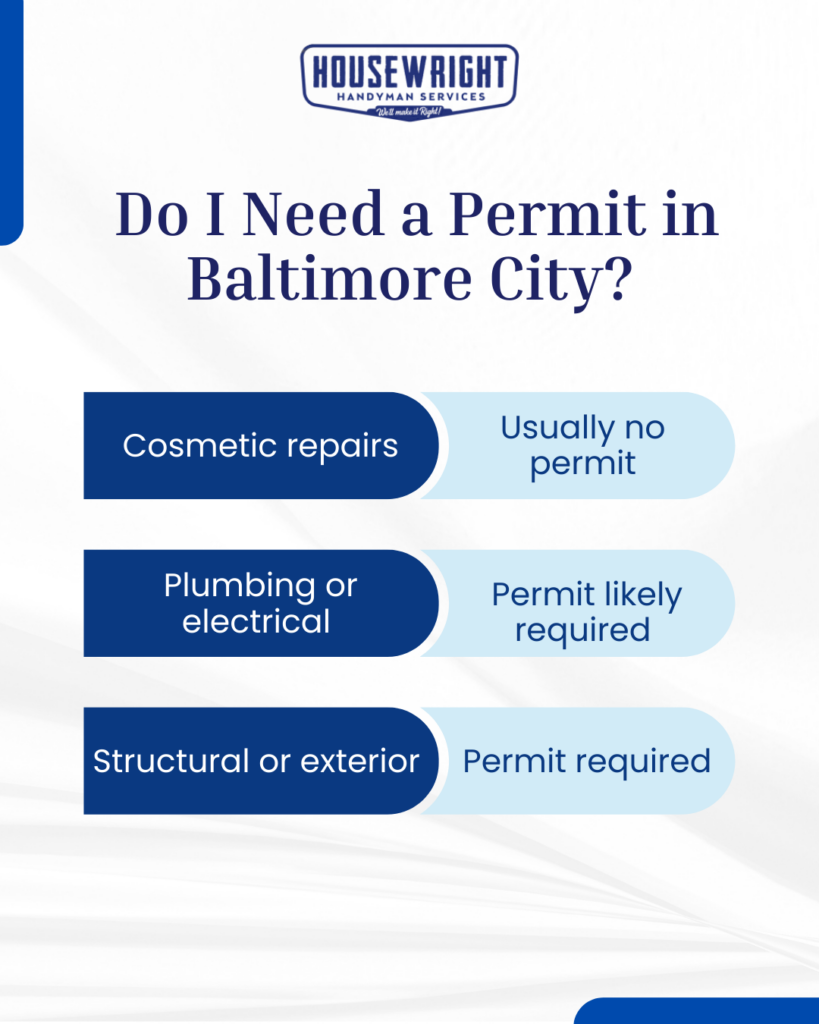

If you’re a Baltimore homeowner planning a small repair, this is one of the most common (and smartest) questions to ask. Permits can feel confusing, overbearing, or unnecessary for “minor” work — but skipping them when required can lead to fines, delays, or problems when you sell your home. Here’s the short, clear answer upfront: Many minor cosmetic repairs in Baltimore City do NOT require a permit — but work involving electrical systems, plumbing, structural components, or exterior changes often DOES. When in doubt, it’s safer (and usually cheaper) to check first rather than fix problems later. Let’s break it down in a practical, homeowner-friendly way. The Rule of Thumb (Direct Answer)You generally do not need a permit for cosmetic, non-structural repairs that don’t affect plumbing, electrical, or safety systems. You usually need a permit if the repair involves:
This distinction matters more in Baltimore City than in many other places due to the age and style of its housing stock. Repairs That Usually Do NOT Need PermitsFor most Baltimore City homes, permits are typically not required for:
These are considered cosmetic or maintenance repairs, and they don’t change how the home functions. Repairs That Usually DO Need PermitsIn Baltimore City, permits are commonly required for repairs involving systems or safety, including:
Even if the repair feels “small,” the system involved is what usually triggers permit requirements. Gray-Area Repairs Homeowners Often Get WrongThis is where Baltimore homeowners run into trouble. Common gray-area jobs include:
Homeowners often assume these are “minor,” but the city may see them differently — especially if inspections are triggered later. Baltimore City–Specific ConsiderationsBaltimore homes aren’t like newer suburban builds, and that affects permit rules. Rowhouses & Shared WallsMany Baltimore City homes share walls, plumbing runs, and electrical pathways. A repair in your home can affect your neighbor’s property, which increases oversight. Older Wiring & PlumbingHomes built before modern codes may have outdated systems. Any upgrade or repair to these systems often requires permits to ensure safety. Historic DistrictsIf your home is in a historic district, exterior changes — even small ones — may require approval, regardless of whether they normally need permits elsewhere. Mixed Renovation HistoryMany homes have been renovated multiple times over decades. Permits help ensure new work doesn’t compound past mistakes. What Happens If You Skip a Required Permit?Skipping permits can cost far more than getting one:
In Baltimore City, unpermitted work often surfaces years later, right when homeowners least want complications. Quick Permit Decision ChecklistUse this before starting any repair: You likely do NOT need a permit if:
You likely DO need a permit if:
If you hesitate on any of these, that’s a sign to ask first. When to Ask a Handyman FirstA knowledgeable handyman can often tell you quickly whether a permit is required — and save you from guessing wrong. This is especially helpful when:
Getting guidance early avoids delays and headaches later. Not sure whether your repair needs a permit? It’s always easier to ask before work begins. |
FAQs on whether you need a permit for repairs in Baltimore CityWhat home repairs require permits in Baltimore City?Electrical, plumbing, structural, HVAC, major exterior work, and many deck or window replacements. Do I need a permit to replace drywall or flooring?Usually no — unless plumbing, wiring, or structural elements are involved. Do electrical or plumbing repairs always need permits?In most cases, yes. Even small changes can trigger permit requirements. What happens if I do work without a permit?You may face fines, stop-work orders, resale issues, or insurance complications. Can a handyman help determine permit requirements?Yes. Experienced local handymen understand Baltimore City rules and common gray areas. |