

Baltimore rowhouses have character that is difficult to reproduce in newer homes. Brick façades, narrow layouts, shared walls and decades of history are part of what makes these properties distinctive. Age also means that small maintenance issues deserve attention.
Good Baltimore rowhouse maintenance starts with noticing changes before they develop into expensive or disruptive repairs. A small roof leak, deteriorating seal around a window or loose section of trim may initially seem insignificant.
HouseWright Handyman works with homeowners and property managers throughout Baltimore City and surrounding Maryland communities on routine home repairs and maintenance. For a rowhouse owner, a sensible starting point is a regular walk-through covering the roof, drainage, masonry, moisture, plumbing and everyday interior wear.
Why Baltimore Rowhouses Need Regular Maintenance
Older homes often show signs of wear gradually. The challenge is separating harmless ageing from changes that deserve investigation.
A stain may indicate an old problem or an active leak. A sticking door could simply need adjustment, or its changing behaviour could point towards another issue.
Regular inspections give you a baseline. Once you know what your property normally looks and feels like, new cracks, damp patches and deteriorating finishes become easier to identify.
The aim is not to keep an older property looking brand new. It is to keep the building dry, safe, functional and comfortable while dealing with deterioration at a manageable stage.
Start With the Roof
The roof may be difficult to see from street level, but it remains one of the most important areas of a rowhouse.
HouseWright Handyman recommends taking visible water damage seriously rather than simply repairing the ceiling or paint beneath it. If moisture has entered the property, finding its source comes first.
Look for Interior Water Stains
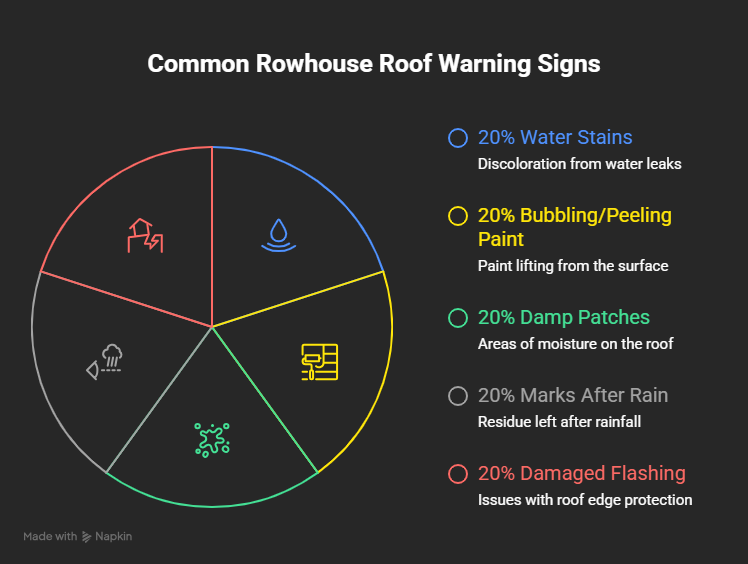
Check upper-floor ceilings and walls for:
- New staining
- Bubbling or peeling paint
- Damp patches
- Marks that return after rain
Check Flashing and Roof Edges
Accessible flashing, roof edges and other junctions should be inspected for visible deterioration.
Inspect After Heavy Weather
A quick inspection following particularly heavy rain can reveal leaks that are difficult to spot during dry weather.
Keep Gutters and Drainage Working Properly
Water needs a clear route away from the property. Blocked gutters and poorly functioning downspouts can allow water to collect where it should not.
Check gutters for debris and look at what happens to water when it leaves the downspout. Persistent pooling near the property deserves attention.
Drainage inspections are particularly useful after storms when problems are easier to see.
Do not wait for an interior damp patch before checking the exterior. Preventative maintenance is usually easier when you catch an obstruction, loose fitting or other visible issue early.
Inspect Brickwork, Mortar and Exterior Surfaces
Brick is one of the defining features of Baltimore’s rowhouses, and exterior masonry deserves a place on the regular maintenance checklist.
HouseWright Handyman works with Baltimore homeowners on exterior and general home repair needs. When dealing with older properties, the cause and extent of deterioration should be understood before covering it with a quick cosmetic fix.
Look for:
- Loose or deteriorating mortar
- Damaged or shifting bricks
- New or widening cracks
- Persistent moisture nearby
A small surface crack does not automatically indicate a serious structural problem. Changes that continue to develop, appear across several connected areas or accompany other movement should be properly assessed.
Historically designated properties may also be subject to additional requirements for certain exterior alterations.
Check Doors and Windows for Changes
Doors and windows provide useful clues about how an older property is ageing.
Check exterior frames for failed caulking, gaps and signs of moisture. Pay attention if a door suddenly becomes difficult to close or a window that previously operated normally begins sticking.
HouseWright Handyman provides door repair and replacement services and works with older Baltimore homes.
Small hardware issues or deteriorated seals can often be dealt with as routine maintenance. Sudden or repeated changes deserve more investigation, particularly when several openings develop similar problems around the same time.
Watch for Basement and Interior Moisture
Moisture problems do not always begin where the damage becomes visible.
A damp interior wall might result from plumbing, exterior water entry or another source elsewhere in the building. Repainting the affected surface before identifying that source can hide the warning temporarily without solving the problem.
Check basements after substantial rainfall and watch for recurring musty smells, damp surfaces, damaged drywall and discoloured finishes.
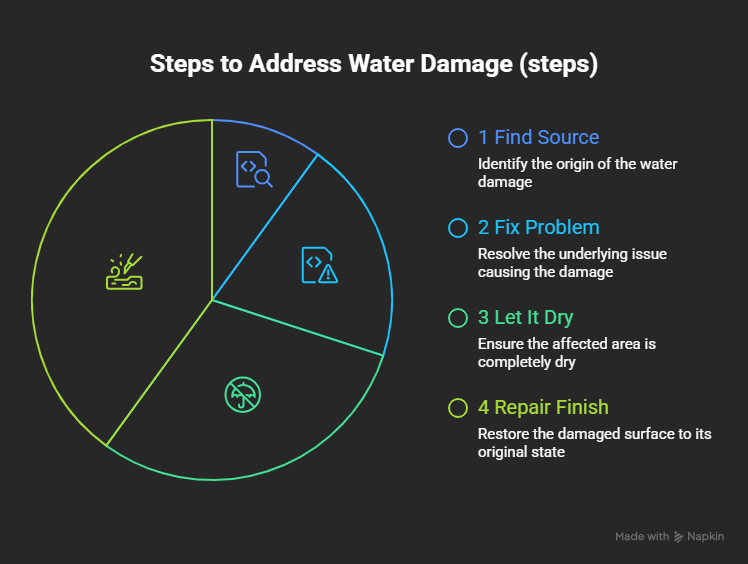
When water damage appears, work in order: find the source, address the underlying problem, allow the area to dry properly and then repair the damaged finish.
Stay Ahead of Small Plumbing Problems
Minor leaks often begin quietly. A little moisture beneath a sink or around a plumbing connection can go unnoticed until surrounding materials are affected.
HouseWright Handyman includes minor plumbing tasks within its wider home repair services.
Periodically check:
- Beneath kitchen and bathroom sinks
- Around toilets and exposed connections
- Near washing machines and dishwashers
- Ceilings below bathrooms
Look for moisture, staining, corrosion and other changes.
Larger plumbing alterations may require an appropriately licensed professional or permits. When you are unsure about the scope, establish what the project requires before work begins.
Take Electrical Warning Signs Seriously
Older properties may contain electrical components installed or altered at different stages of the home’s history.
Repeated breaker trips, buzzing, burning smells, warm outlets and visible wiring damage should be treated seriously rather than approached as DIY experiments.
Routine observations are useful, but work involving electrical systems may fall outside ordinary handyman maintenance and can require qualified tradespeople.
The size of the visible problem does not determine the level of risk. If wiring or electrical safety is involved, use the appropriate professional.
Keep Up With Everyday Interior Repairs
Routine maintenance also includes the small things homeowners interact with every day.
HouseWright Handyman handles common repair work such as drywall, doors, flooring, trim and general household maintenance.
Walk through the home occasionally and look for:
- Loose handrails or hardware
- Damaged flooring
- Cracked drywall or plaster
- Trim beginning to separate
Grouping several small jobs into a maintenance list can make them easier to manage.
Recurring damage needs extra attention. If the same crack, stain or loose component repeatedly returns after repair, investigate why rather than continually treating the visible symptom.
Build a Seasonal Rowhouse Maintenance Routine
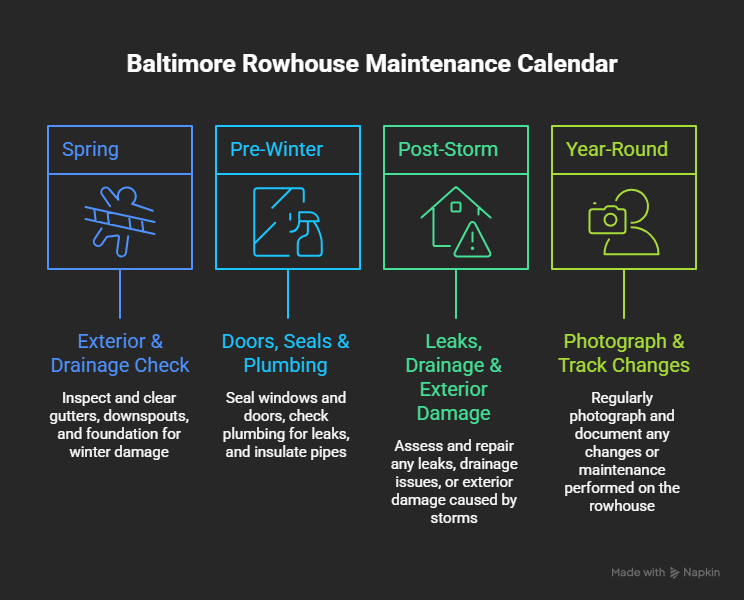
A useful maintenance plan does not require inspecting everything every week. Seasonal checks are easier to keep up with.
Spring Maintenance
Look for damage left by winter weather. Pay particular attention to exterior materials, drainage and areas previously affected by moisture.
Pre-Winter Checks
Inspect doors, exterior seals and vulnerable plumbing areas before temperatures fall.
Post-Storm Inspections
After unusually heavy rain or severe weather, check for new leaks, drainage problems or exterior damage.
Keep a Simple Maintenance Record
Take photographs of cracks, stains or worn areas and record the date. Comparing photographs later makes it easier to tell whether something is actually changing.
When to Call a Professional
Some maintenance jobs are straightforward. Others become difficult to diagnose because the visible damage does not reveal its actual cause.
HouseWright Handyman provides residential repair and maintenance services across Baltimore and surrounding areas. A professional assessment can be particularly useful when a problem keeps returning or when several repairs have accumulated.
Jobs involving significant structural changes, major plumbing or electrical systems may require specialised professionals, permits or additional licensing.
When in doubt, explain the full problem rather than asking only for the obvious cosmetic repair. A responsible professional should be able to clarify whether the work fits their scope or needs a specialist.
FAQs
How often should a Baltimore rowhouse be inspected?
Homeowners should perform simple visual checks throughout the year, with more structured inspections seasonally and after significant storms. Areas with previous moisture or repair problems may need closer monitoring.
What are the most common maintenance areas in an older rowhouse?
Roofs, gutters, drainage, masonry, windows, doors, plumbing and interior moisture are useful areas to monitor regularly. The needs of each property will depend on its condition, age and previous repairs.
Should I worry about cracks in my rowhouse?
Not every crack indicates a serious problem. New cracks, widening cracks or cracking accompanied by other changes should be assessed rather than repeatedly covered with cosmetic repairs.
When should I call a handyman for rowhouse repairs?
A handyman can be useful for routine repairs and maintenance within their permitted scope. Projects involving structural, major plumbing or electrical work may require appropriately licensed specialists.
How can I prevent moisture problems in a rowhouse?
Regularly inspect roofs, drainage, exterior seals and visible plumbing. If moisture appears indoors, identify and repair the source before repainting or replacing damaged finishes.