

Why Interior Painting Is More Than a Colour Change
Painting is one of the easiest ways to refresh your home without making major structural changes.
Homeowners commonly repaint when:
- Walls are faded, marked, or scuffed
- Rooms have outdated colours
- Drywall repairs have been completed
- Preparing a home for sale
- Moving into a new property
- Refreshing a rental between tenants
- High-traffic areas are showing wear
The important thing is to look at what is underneath the existing paint.
Paint can cover a colour. It cannot properly fix damaged drywall, cracks, moisture problems, or poor previous repairs.
Check Your Walls Before You Paint
Take a close look at your walls in good lighting. You may find:
- Nail and screw holes
- Small dents
- Drywall cracks
- Peeling paint
- Water stains
- Rough previous patches
- Gaps around trim
- Scuffed corners
- Damaged drywall
Minor imperfections can often be patched and sanded before painting. Larger cracks, recurring stains, or peeling areas may require more investigation.
For example, simply painting over a water stain does not solve the source of the moisture.
Fix the underlying problem before covering it.
Older Baltimore County Homes May Need Extra Preparation
Baltimore County includes both newer homes and older properties that have been repaired or renovated over the years.
Older homes may have layers of previous paint, uneven trim, patched drywall, plaster surfaces, aging materials, or small gaps caused by normal movement.
This does not necessarily make the painting project difficult, but it does make preparation more important.
Two rooms of the same size can require very different amounts of work depending on the condition of their walls.
What Does Proper Painting Preparation Include?
A professional-looking finish starts before the first coat of paint.
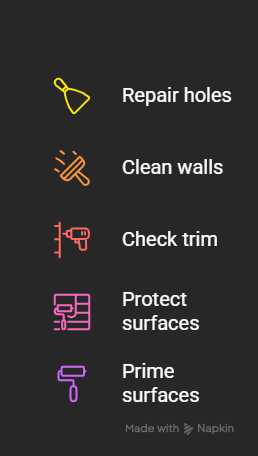
Repair the Surface
Fill holes, dents, and minor cracks. Damaged drywall should be repaired and sanded so the new paint has a smooth surface.
Clean the Walls
Dust, grease, and grime can affect how well paint adheres, especially in kitchens, bathrooms, hallways, and other busy areas.
Check Trim and Caulking
Inspect baseboards, window trim, door frames, and molding. Small gaps and damaged areas can become much more noticeable beside freshly painted walls.
Protect the Room
Move furniture away from the walls and protect floors, fixtures, and anything that should not be painted.
Prime Where Needed
New drywall, repaired areas, stains, or major colour changes may require primer to create a more consistent base.
Should You DIY or Hire a Professional?
Interior painting can be a reasonable DIY project when the room is straightforward and the walls are already in good condition.
Before starting, ask yourself:
- Do I have enough time for preparation and multiple coats?
- Do the walls need repairs first?
- Can I safely reach ceilings and high areas?
- Do I have the necessary tools?
- How important is a clean, consistent finish?
A straightforward bedroom is very different from a stairwell with damaged drywall, detailed trim, and high ceilings.
Professional help may make more sense when several rooms need painting, significant wall repairs are required, ceilings or stairwells are involved, or you simply do not have the time to complete the job properly.
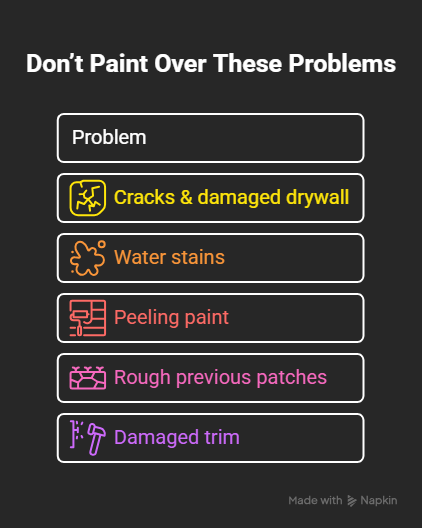
Don’t Paint Over Drywall Problems
One common mistake is treating damaged drywall as a painting problem.
If you have holes, cracks, dents, damaged seams, or rough previous patches, repair them first.
Paint may change the colour of the damaged area, but it will not make the underlying problem disappear.
This is also why combining drywall repair and painting can make sense. The wall can be repaired, prepared, and finished as part of the same overall project.
Which Rooms Usually Show Wear First?
High-traffic areas often need attention sooner.
Hallways and entryways collect fingerprints, scuffs, and bumps.
Living rooms can develop marks from furniture, wall-mounted items, and everyday activity.
Kitchens may require additional surface cleaning before painting.
Bathrooms require careful attention to the existing surface and moisture conditions.
Bedrooms are often more straightforward and can be a good place for a simple interior refresh.
Interior Painting Before Selling Your Home
If you are preparing a Baltimore County home for sale, look beyond the wall colour.
Walk through the property and check for:
- Old nail holes
- Marked walls
- Damaged trim
- Chipped paint
- Poor drywall patches
- Cracked caulk
- Highly personalised colours
The goal does not necessarily have to be making every room look brand new. Focus on creating a clean, consistent, well-maintained appearance.
Complete minor repairs before painting so the finished room does not highlight problems that were already there.
How to Choose an Interior Painting Service in Baltimore County
Do not compare providers on price alone. Ask what is actually included.
Before hiring, ask:
- Is wall preparation included?
- Are minor drywall repairs included?
- Are ceilings and trim included?
- How will floors and furniture be protected?
- Are materials included in the estimate?
- How are unexpected wall problems handled?
- Is cleanup included?
A clear scope makes different estimates much easier to compare.
Interior Painting Checklist
Before painting, check:
- Walls for holes, dents, and cracks
- Ceilings for stains or damage
- Drywall for necessary repairs
- Trim and baseboards for damage
- Doors and frames for chipped paint
- Surfaces for dirt or grease
- Floors and furniture are protected
- Paint colour and finish are selected
- Primer requirements are considered
- Other repairs are completed first
FAQs About Interior Painting in Baltimore County
Can a handyman handle interior painting?
Interior painting may be offered as part of handyman and home maintenance services. Before hiring, confirm whether the provider handles painting and ask what preparation, repairs, materials, and cleanup are included.
Should drywall be repaired before painting?
Yes. Holes, cracks, dents, damaged sections, and rough previous repairs should generally be addressed before applying the finish coat.
Should I paint my home myself or hire someone?
It depends on the project. A straightforward room with walls in good condition may be manageable as a DIY project. Multiple rooms, damaged drywall, high ceilings, stairwells, or detailed trim can make professional help more practical.
Can painting be combined with other home repairs?
Yes. Painting often goes hand in hand with drywall repair, trim repair, door adjustments, caulking, and other small interior maintenance projects.