

What Are the Most Common Drywall Problems?
Drywall is durable, but everyday use, moisture, movement, and accidental impacts can all leave visible damage.
Small Holes and Dents
Nails, screws, furniture, door handles, moving boxes, and everyday accidents can leave holes or dents in drywall.
Very small imperfections may need only patching compound and sanding. Larger holes usually require additional support or a drywall patch so the repaired section remains stable.
Drywall Cracks
Cracks often appear near windows, doors, corners, and drywall seams. A minor crack may simply be related to normal movement or an aging joint.
However, repeatedly repairing a crack without understanding why it keeps returning may only hide the problem temporarily.
Nail Pops
A small circular bump on the wall or ceiling may be a nail or screw pushing against the drywall surface.
Simply covering the bump with compound may not produce a lasting repair. The drywall should first be properly secured before the surface is refinished.
Peeling Tape and Damaged Seams
Drywall tape can loosen, bubble, or become visible over time. Repair generally involves removing or securing the affected tape, applying joint compound, smoothing the area, and preparing it for paint.
Water-Damaged Drywall
Water stains, soft areas, discoloration, bubbling paint, or sagging drywall require more attention than a normal patch.
Before repairing water-damaged drywall, the source of the moisture should be identified and corrected. Otherwise, the new drywall may simply become damaged again.
HouseWright Handyman provides professional drywall repair services for holes, cracks, seams, water-damaged sections, and other common wall problems.
Should Drywall Be Patched or Replaced?
One of the most important decisions in a drywall repair is whether the damaged area can be patched or whether part of the drywall should be removed and replaced.
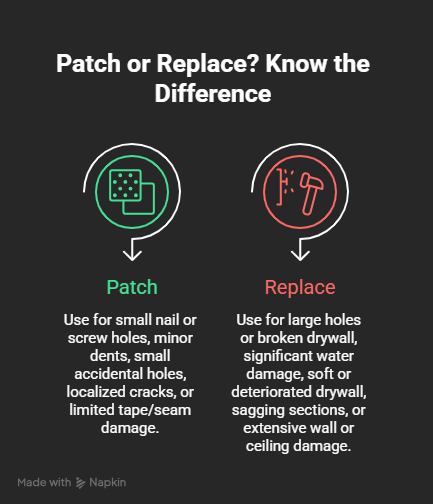
Patching May Be Suitable For:
- Small nail and screw holes
- Minor dents
- Small accidental holes
- Localized cracks
- Limited seam or tape damage
- Minor surface imperfections
Replacement May Be Better For:
- Large holes or broken sections
- Significant water damage
- Soft or deteriorated drywall
- Sagging areas
- Extensive damage across a wall or ceiling
- Sections that cannot provide a stable base for a patch
The visible size of the problem does not always tell the whole story. A small water stain, for example, may indicate a larger moisture issue behind the surface.
That is why identifying the cause should come before deciding how to repair the wall.
How Professional Drywall Repair Works
The exact process varies according to the damage, but most drywall repairs follow several basic stages.
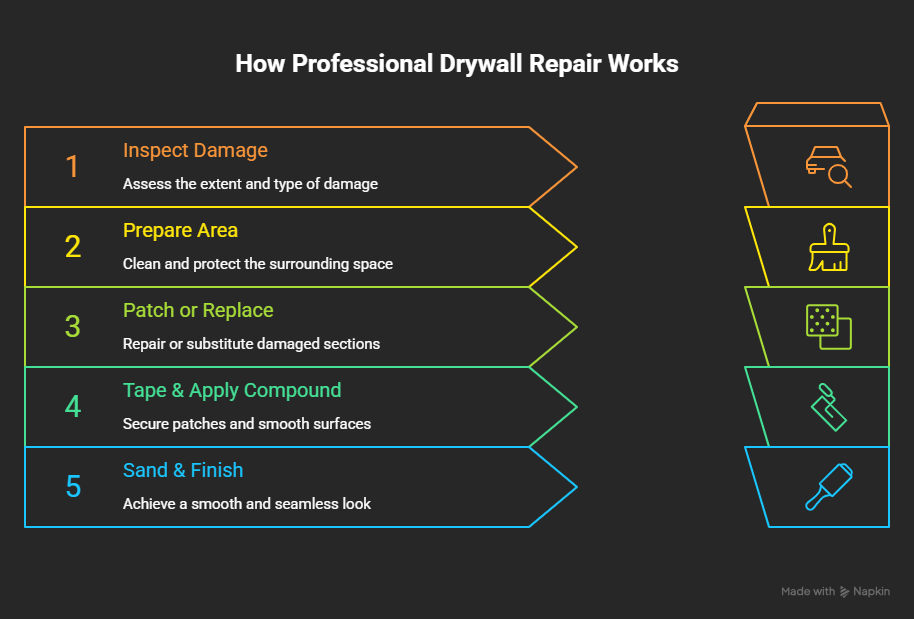
1. Inspect the Damage
First, the affected area should be assessed to determine its size, condition, and likely cause.
For cracks or water damage, this stage is particularly important. Repairing the finish without addressing an underlying issue can result in the same damage returning.
2. Prepare the Area
Loose drywall, damaged tape, broken material, or unstable compound is removed as necessary. Larger holes may need to be trimmed into a clean shape so a replacement piece can be fitted securely.
3. Patch or Replace the Drywall
Small damage may be filled directly. Larger openings generally need backing or reinforcement and a new piece of drywall.
For badly damaged areas, part of the existing drywall may need to be removed and replaced.
4. Apply Tape and Joint Compound
Seams are taped where necessary, and joint compound is applied in controlled layers.
The objective is not simply to fill the damaged area. The repair needs to transition smoothly into the surrounding wall so the patch does not remain obvious after painting.
5. Sand and Finish
Once the compound has dried, the area is sanded smooth. Depending on the wall, texture matching may also be needed.
The repaired surface can then be prepared for primer and paint.
Why a Drywall Patch Can Still Be Visible After Painting
A common frustration with DIY drywall repair is finishing the patch, painting the wall, and still being able to see exactly where the damage was.
This usually happens because drywall repair is as much about finishing as filling.
Common reasons include:
- Uneven joint compound
- Insufficient feathering around the repair
- Visible sanding marks
- Different surface textures
- Skipping primer
- Paint sheen differences
- A patch that sits slightly above or below the surrounding wall
The goal of a good repair is for the transition between the old wall and repaired area to become difficult to notice once the surface is finished.
If several areas of your home need attention, combining drywall work with other home repair services can also make it easier to tackle a larger maintenance list in one project.
Can You Repair Drywall Yourself?
Some drywall repairs are reasonable DIY projects.
A homeowner who is comfortable with basic tools may be able to handle a tiny nail hole or superficial dent. The challenge increases quickly as the damage becomes larger.
Consider professional drywall repair in Baltimore County when:
- The hole is large
- Several areas are damaged
- Drywall needs to be replaced
- The ceiling is affected
- Water damage is involved
- Tape or seams repeatedly fail
- You cannot determine why a crack keeps returning
- The repaired area needs to blend cleanly with a finished room
DIY repairs can also take longer than expected because joint compound needs to be applied, allowed to dry, sanded, and sometimes reapplied before painting.
What Affects the Cost of Drywall Repair in Baltimore County?
There is no single price that applies to every drywall repair. HouseWright Handyman notes that repair pricing depends on the extent of the damage and provides an estimate before work begins.
Factors that can affect the scope include:
- Size of the damaged area
- Number of holes or cracks
- Wall versus ceiling repair
- Accessibility
- Whether drywall must be replaced
- Number of compound applications required
- Texture matching
- Water-related damage
- Painting or finishing requirements
- Materials needed for the repair
For a broader explanation of how repair professionals price different types of jobs, see our guide to handyman costs in Maryland.
What Should You Do Before Scheduling Drywall Repair?
A little preparation can make it easier to explain the problem and get the right repair.
Take clear photographs of each damaged area and note approximately how large it is. If you have several holes, cracks, or dents, photograph all of them rather than only the worst one.
For water damage, check whether the moisture source has already been addressed. A drywall repair should not be used to conceal an active leak.
It also helps to decide whether you want only the drywall repaired or need the surface prepared and painted afterward.
Choosing a Drywall Repair Professional
When comparing providers, do not judge the job only by how quickly someone says they can fill the hole.
Ask practical questions such as:
- What repair method will be used?
- Does the damaged drywall need replacement?
- Will the area be sanded and prepared for paint?
- Can the existing texture be matched?
- Are materials included?
- Will more than one visit be required?
- Is painting included or separate?
- Is the provider insured?
HouseWright Handyman states that it is fully insured and serves Baltimore County along with Baltimore City, Harford County, Howard County, and other Maryland service areas.
Get Your Walls Looking Right Again
Drywall damage rarely improves on its own. A small hole may remain cosmetic, but cracks, damaged seams, and moisture-related problems can become more difficult to address if the underlying cause is ignored.
HouseWright Handyman handles drywall patching, crack and seam repairs, damaged sections, drywall replacement, sanding, texture matching, and preparation for painting.
Need drywall repair in Baltimore County? Contact HouseWright Handyman to discuss the damaged area and request an estimate.
Frequently Asked Questions About Drywall Repair in Baltimore County
How much does drywall repair cost in Baltimore County?
The cost depends on the size and type of damage, accessibility, materials, finishing requirements, and whether drywall needs to be replaced. Small patches and extensive water-damaged sections require very different amounts of work, so an assessment is usually needed for an accurate estimate.
How long does drywall repair take?
Small repairs may be completed relatively quickly, although joint compound needs time to dry before sanding and finishing. Some repairs therefore require another stage or visit before the surface is ready for paint.
Can you repair drywall with water damage?
Damaged drywall can often be repaired or replaced, but the source of the moisture should be corrected first. Severely softened, sagging, or deteriorated drywall may need removal rather than simply being patched.
Can drywall cracks come back after repair?
Yes. A crack can return when its underlying cause remains unresolved or when the repair is not properly reinforced. Recurring cracks should be assessed rather than repeatedly covered with compound.
Do I need to paint the whole wall after drywall repair?
Not always. However, even a well-finished patch can be noticeable if the existing paint has faded or if the sheen and texture do not match. Depending on the wall’s condition, painting a larger area may create a more consistent finish.
Should I repair drywall before painting a room?
Yes. Holes, cracks, dents, loose tape, and uneven areas should generally be repaired and smoothed before painting. Paint changes the color of a surface but does not hide poor drywall preparation.