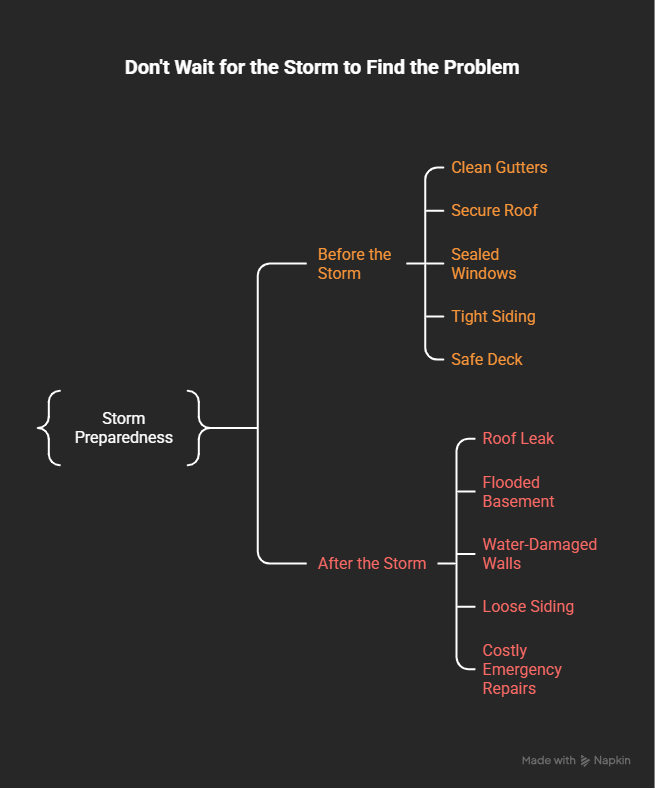
Why Storm Season Preparation MattersEvery year, Baltimore homeowners put off small repairs, thinking a loose gutter or minor roof issue can wait. Then the first heavy thunderstorm arrives, turning a simple fix into an expensive repair. Storm damage often starts long before the storm itself. Cracked window seals, clogged gutters, loose siding or damaged roofing may seem insignificant, but heavy rain and strong winds can quickly lead to leaks, water damage and structural problems. This is especially true for Baltimore’s older rowhouses, historic homes and aging suburban properties, where roofing, exterior woodwork, and drainage systems need regular maintenance. Combined with Maryland’s humid summers and sudden storms, small issues can escalate quickly. This guide covers the key storm season home maintenance tasks every homeowner should check before severe weather arrives, helping you decide which repairs you can handle yourself and when it’s time to call a handyman.
|
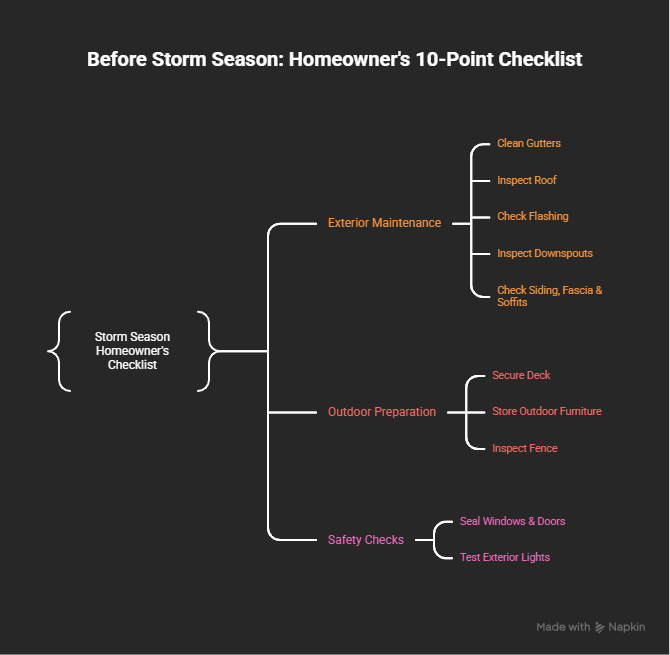
Roof, Gutters & Downspouts: Your First Line of DefenceYour roof and drainage system take the first hit during heavy rain and strong winds. If either is already weakened, stormwater can quickly find its way into ceilings, walls, basements and foundations. Start by checking for loose, curled, or missing shingles. Damaged flashing around chimneys, vents and roof edges is another common entry point for water. You do not need to climb onto the roof to inspect it; use binoculars from the ground or look from an upper window. Inside, watch for ceiling stains, damp attic insulation or a musty smell after rainfall. Next, inspect your gutters. Clogged gutters cannot move water away efficiently, so they overflow against fascia boards, siding, and masonry. Look for sagging sections, plant growth, rust or water spilling over the edges. Downspouts should be firmly attached and direct water several feet away from the house. If water pools near the foundation, the downspout may be loose, blocked or too short. Homeowners can safely clear low gutters, remove visible debris and check ground-level downspout connections. Avoid ladder work in wet or windy conditions and do not attempt roof repairs without the right equipment. Call a handyman if you notice loose shingles, damaged flashing, sagging gutters, repeated overflow or water collecting around the foundation. Fixing these issues before storm season can prevent roof leaks, basement moisture and far more expensive repairs later. |
Windows, Doors & Exterior SealsWindows and doors are easy to overlook before storm season, but they’re often the first places where wind-driven rain finds its way inside. Small gaps around frames may not seem urgent on a dry day, yet they can quickly lead to water damage, drafts and higher energy bills once heavy storms arrive. What to Look ForInspect your home’s exterior for:
These issues are particularly common in Baltimore’s older homes, where years of seasonal expansion and contraction can weaken seals. Combined with Maryland’s humid summers, moisture can seep into small openings, encouraging mold growth, wood rot and interior wall damage over time. DIY or Call a Handyman?Replacing worn weatherstripping or applying a small amount of exterior caulk is often manageable for confident DIYers. However, if windows are leaking, trim has pulled away from the house or moisture is already entering around the frame, it’s best to call a handyman. Repairing the problem early helps weatherproof your home and prevents minor seal failures from becoming costly storm-related repairs. |
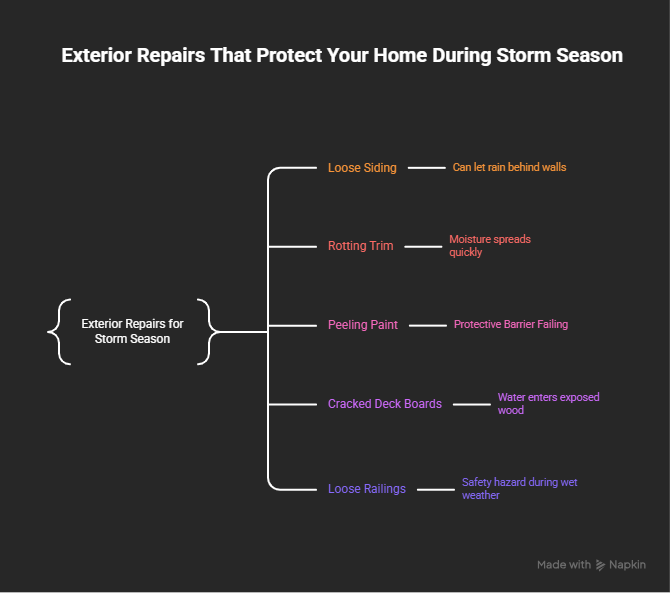
Siding, Decks & Exterior Wood DamageStorms don’t just test your roof: they also expose weaknesses in your home’s exterior. Loose siding, rotting trim, peeling paint and aging wood allow rainwater to seep behind protective surfaces, leading to hidden damage. Inspect your home for warped or loose siding, soft or discolored trim, peeling paint and cracked or splintered deck boards. Check that deck railings are secure and don’t wobble. These are all signs that moisture may already be affecting your home’s exterior. During Baltimore’s heavy summer storms, wind-driven rain can force water behind loose siding and into exposed wood. Trapped moisture can lead to rot, mold, insect damage and costly structural repairs if left untreated. Homeowners can repaint exposed wood, replace small sections of caulk and tighten accessible fasteners. However, if siding has pulled away from the wall, trim feels soft or deck railings are unstable, it’s best to have a handyman address the problem before storm season arrives. Preventative repairs now are far less expensive than repairing water damage later.
|
Small Repairs That Become Big Problems During StormsSome of the most expensive storm damage begins with repairs that seem too small to matter. A loose fence gate, cracked masonry or detached soffit may look harmless, but heavy rain and strong winds can quickly turn them into major problems. Inspect fence gates, hinges and posts for rust or movement. Make sure exterior light fixtures are secure and weatherproof. Tighten loose shutters before high winds pull them away from the house and check brickwork for widening cracks that could let water seep inside. Don’t overlook the fascia and soffits beneath your roofline. Damaged fascia can allow water into the roof structure, while loose soffits create openings for moisture, insects and small animals. Most of these issues are inexpensive to fix when caught early. Tightening hardware, sealing small cracks or replacing damaged fasteners can help prevent costly repairs later. If you notice deteriorating masonry, loose fascia, unstable shutters or soffits pulling away from the roof, schedule repairs before storm season arrives. Preventative maintenance is always more affordable than dealing with storm-related damage afterward. |
Baltimore Storm Preparation ChecklistBefore storm season arrives, take a few minutes to inspect your home’s exterior. This simple checklist can help you spot small issues before they become costly repairs.
If you answered “No” to any of these, now is the best time to repair them. A little preventative maintenance today can help protect your Baltimore home from water damage, costly emergency repairs and unnecessary stress when the next storm arrives.
|
Don’t Wait Until the Storm Finds the Weak SpotThe best time to repair your home isn’t after a storm: it’s before one arrives. Taking care of small maintenance issues now can help prevent water damage, structural problems and costly emergency repairs later. For more than 30 years, HouseWright Handyman has helped homeowners across Baltimore City, Baltimore County, Harford County and Howard County prepare their homes for every season. Whether you need gutter repairs, exterior maintenance, deck repairs or help tackling a growing to-do list, our experienced team is ready to help. Schedule your handyman service before storm season arrives and protect your home with repairs done right the first time.👉 https://housewrighthandyman.com |
FAQsWhat home repairs should I complete before storm season?Prioritize roof damage, clogged gutters, loose downspouts, cracked seals, damaged siding, unstable railings, loose fascia, soffits, shutters and exterior fixtures. How do I know if my gutters need repair before heavy rain?Look for sagging sections, rust, leaks, overflowing water, loose fasteners or pooling near the foundation. These signs mean water is not draining properly. Can small roof damage become worse during storms?Yes. Loose shingles and damaged flashing can allow wind-driven rain inside, turning a minor weakness into ceiling stains, insulation damage or leaks. Should I inspect my windows before storm season?Yes. Check for cracked caulk, damaged weatherstripping, loose trim, drafts and water stains around frames before heavy rain arrives. Is storm preparation worth it for older Baltimore homes?Absolutely. Older roofs, masonry, drainage systems, windows and exterior woodwork often have hidden weaknesses that storms can quickly expose. Which storm preparation jobs can I safely do myself?You can inspect from the ground, clear accessible debris, seal small gaps, tighten low-level hardware and secure outdoor furniture. When should I hire a handyman before storm season?Call a handyman for roof repairs, unstable ladders, damaged siding, rotting wood, sagging gutters, loose railings or problems beyond safe reach. How early should homeowners prepare for storm season?Start several weeks before severe weather is expected. Early preparation provides enough time to inspect, schedule repairs and avoid last-minute emergency work. |